
Brubru
EU policy intelligence
Commission Implementing Regulation (EU) 2025/500 imposes definitive anti-subsidy duties on aluminium road wheels from Morocco, finding that Chinese Belt-and-Road financing channelled through CITIC Dicastal's Moroccan subsidiary is attributable to the Government of Morocco as country of export, the clearest application yet of the cross-border subsidy doctrine.
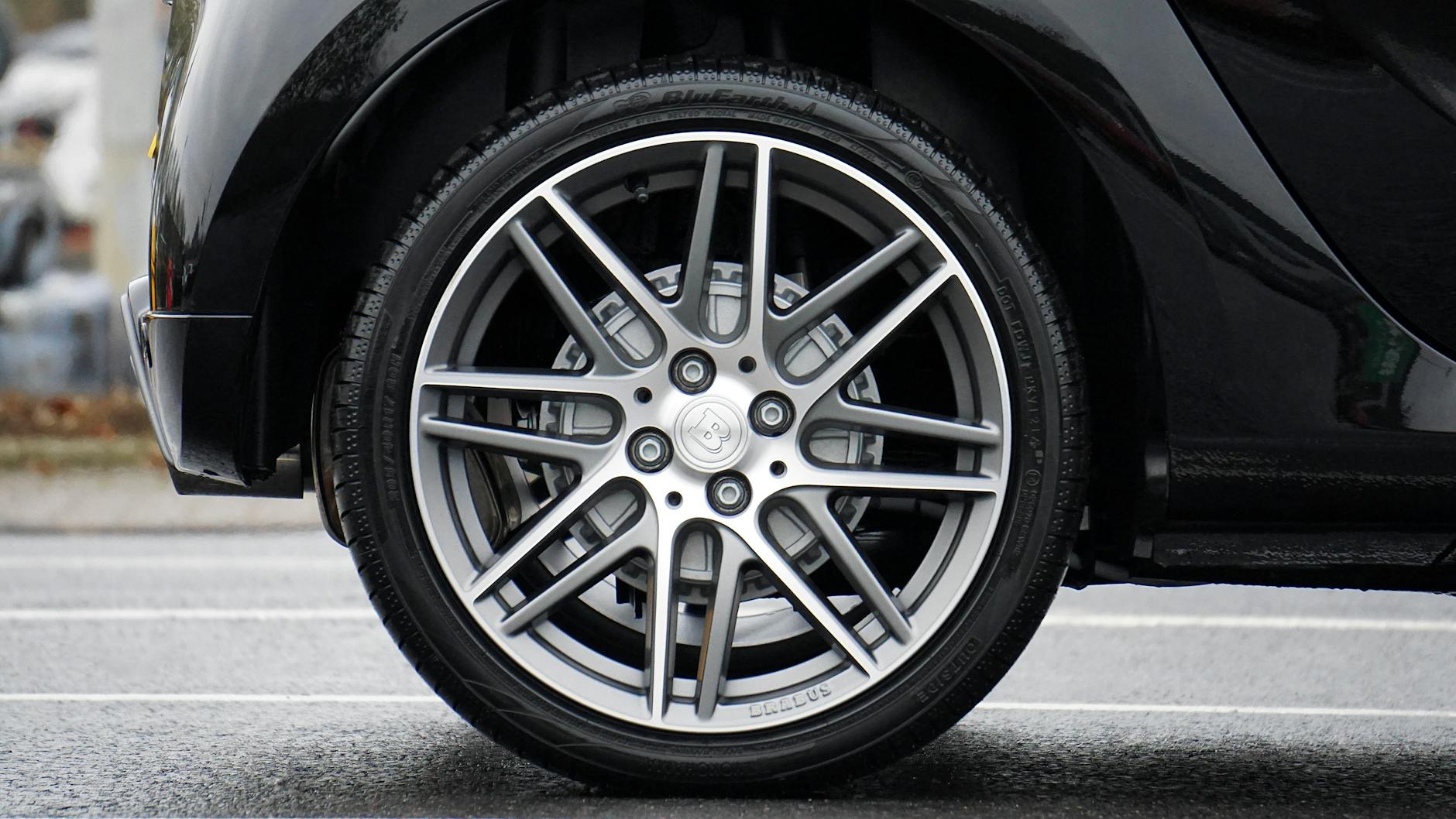
The EU's first anti-subsidy action against Morocco, and the fourth application of the cross-border subsidy doctrine
Commission Implementing Regulation (EU) 2025/500 of 13 March 2025 imposes definitive countervailing (anti-subsidy) duties on imports of certain aluminium road wheels (ARW) originating in Morocco. The legal basis is Article 15 of Regulation (EU) 2016/1037, the EU's basic anti-subsidy Regulation.
The investigation was initiated on 16 February 2024, following a complaint lodged on 3 January 2024 by the Association of European Wheel Manufacturers (EUWA, anonymised at its request for fear of customer retaliation).
The measure runs in parallel with definitive anti-dumping duties of 9.0% to 17.5% already in force on the same product, imposed by Commission Implementing Regulation (EU) 2023/99 of 11 January 2023. The countervailing duties stack on top of those anti-dumping duties, subject to the rule against double-counting export subsidies.
This is the EU's first countervailing-duty action against Morocco. Its defining feature is the application of the cross-border subsidy doctrine: preferential financing provided by the Government of China under the Belt and Road Initiative, channelled through the Chinese group CITIC Dicastal into its Moroccan subsidiary Dika Morocco Africa (DMA), is treated as a subsidy attributable to the Government of Morocco as the country of export.
CITIC Dicastal built its Moroccan factory partly to circumvent the EU's existing anti-dumping duties on Chinese aluminium road wheels and partly using cheap financing from Chinese state institutions. Morocco's government set up the investment framework, granted special-economic-zone access and authorisations, and retained powers to monitor the investment under a Steering Committee established by the investment agreement. On that basis, the Commission attributed the Chinese financing to Morocco.
The case rests squarely on the Court of Justice judgment of 28 November 2024 in the joined Egyptian fibreglass cases (Hengshi Egypt and Jushi Egypt, C-269/23 P and C-272/23 P, ECLI:EU:C:2024:984), the most recent authoritative ruling on the cross-border subsidy doctrine. It is the first case to apply that judgment as binding precedent after it was handed down.
Full title: Commission Implementing Regulation (EU) 2025/500 of 13 March 2025 imposing definitive countervailing duties on imports of certain aluminium road wheels originating in Morocco.
OJ reference: OJ L, 2025/500. ELI: http://data.europa.eu/eli/reg_impl/2025/500/oj
Product: certain aluminium road wheels of motor vehicles of HS headings 8701 to 8705, whether or not with accessories and whether or not fitted with tyres. CN codes ex 8708 70 10 and ex 8708 70 50 (TARIC codes 8708701015, 8708701050, 8708705015, 8708705050).
Exporting producers investigated: two cooperating producers: Dika Morocco Africa S.A. (DMA, a subsidiary of CITIC Dicastal) and Hands 8 S.A. Both are based in Morocco.
Article 1: definitive countervailing duties by producer and TARIC additional code
The rates below are additional countervailing duties. They stack on top of the existing anti-dumping duties from Reg (EU) 2023/99 (9.0% to 17.5%) as well as the standard customs duty. DMA's combined maximum exposure, adding the 31.4% CVD to the 17.5% top anti-dumping rate, is approximately 48.9% before the standard duty. All duties are ad valorem on the CIF value at the EU border. The entry into force is the day after publication of this Regulation in the Official Journal.
| TARIC additional code | Producer | Overall subsidy rate | CVD rate (definitive) |
|---|---|---|---|
| C897 | Dika Morocco Africa S.A. (DMA) CITIC Dicastal subsidiary | 31.45% | 31.4% |
| C873 | Hands 8 S.A. | 5.60% | 5.6% |
| C999 | All other imports originating in Morocco | residual | 5.6% |
The Commission had already imposed definitive anti-dumping duties on the same product by Commission Implementing Regulation (EU) 2023/99 of 11 January 2023, with rates of 9.0% to 17.5%. The countervailing duties in this Regulation are additional to those anti-dumping duties. Double-counting of export subsidies is prevented as required by EU law. In practice, a wheel from DMA entering the EU faces the standard customs duty, plus the anti-dumping rate applicable to DMA, plus the 31.4% countervailing duty.
How Chinese Belt-and-Road financing became a Moroccan countervailable subsidy
CITIC Dicastal is a major Chinese manufacturer of aluminium road wheels. It established Dika Morocco Africa S.A. (DMA) as its Moroccan subsidiary, siting the factory in a Moroccan special economic zone. The Commission found two interrelated motivations for this investment: first, to circumvent the EU's existing anti-dumping duties on Chinese aluminium wheels (in force since January 2023); second, to take advantage of preferential financing available from Chinese state institutions under the Belt and Road Initiative.
The financing provided to DMA included de facto loans linked to capital goods (5.44% of DMA's total subsidy rate), de facto loans linked to inputs (2.03%), capitalised loans (1.29%), capitalised payables (1.10%), and loans from Dicastal Asia and Dicastal HK (0.51%), totalling over 10% of DMA's subsidy rate from financing instruments alone.
The Commission found that the Government of Morocco (GOM) actively enticed CITIC Dicastal to invest, offering domestic subsidies, special-economic-zone access and authorisations, while expecting in exchange Chinese technical know-how and preferential financing under the Belt and Road Initiative. Crucially, the GOM set up the cooperation framework, granted the relevant authorisations and economic-zone access, and retained monitoring powers through a Steering Committee established under Article 25 of the investment agreement.
That level of involvement by the host government crossed the attribution threshold: Morocco set up the arrangement under which the Chinese financing flowed, so the Commission treated the financial contribution as one by the Government of Morocco as the country of export. Morocco's own domestic subsidies (tax and import-duty exemptions, grants and preferential input pricing) were assessed and added on top.
The GOM rejected the attribution reasoning and argued that the WTO Agreement on Subsidies and Countervailing Measures does not allow countervailing "transnational" subsidies. The Commission noted that once the financial contribution is attributed to the GOM as the country of export, the subsidy is not transnational: it is simply a financial contribution by the country of export, to which standard CVD rules apply in full.
The Court of Justice of the European Union, in its judgment of 28 November 2024 in joined cases C-269/23 P and C-272/23 P (Hengshi Egypt Fiberglass Fabrics SAE and Jushi Egypt for Fiberglass Industry SAE v European Commission, ECLI:EU:C:2024:984), confirmed that a subsidy may take the form of a foreign government's investment into an undertaking in another country, and may be attributed to the host (export) government where that government's conduct allows the inference that it granted, or permitted the firm to benefit from, the financial contribution.
Regulation (EU) 2025/500 is the first definitively adopted CVD measure to apply this judgment as binding precedent. The earlier China-Egypt glass-fibre fabrics case (Reg (EU) 2020/776) had pioneered the doctrine at Commission level; the Court of Justice has now confirmed it is legally correct. The Morocco aluminium wheels case then applies it in a Belt-and-Road context involving a different host country and a different product, demonstrating that the doctrine is not limited to the China-Egypt special economic zone arrangement.
A full breakdown by producer; definitive rates established under the basic Regulation
Where cooperation by producers, suppliers or governments was insufficient, the Commission used the best available facts under Article 28 of Regulation (EU) 2016/1037. This methodology, sometimes referred to as "adverse inferences", ensures that non-cooperation does not result in lower countervailing duty rates than those applicable to cooperating parties.
Material injury established on the basis of volume, market share and profitability data
Under the current basic Regulation, the duty equals the full subsidy amount
In EU anti-dumping law, the lesser-duty rule can cap the duty at the injury margin (the level needed to remove injury) rather than the full dumping margin, if that is lower. This rule does not apply in anti-subsidy investigations under the current Regulation (EU) 2016/1037, unless it can be clearly concluded that setting the duty at the full subsidy amount is not in the Union interest.
Article 15(1) of the basic Regulation provides that the countervailing duty shall not exceed the amount of countervailable subsidies established. Because no lesser-duty equivalent is prescribed, and because the Commission found no Union interest reason to depart from the full subsidy amount, the definitive duties are set at the full subsidy rate: 31.4% for DMA (rounding 31.45%) and 5.6% for Hands 8.
This means the countervailing duties are added to, not substituted for, the existing anti-dumping duties. The combined burden on DMA's wheels is therefore the sum of the anti-dumping rate applicable to DMA (from Reg (EU) 2023/99), plus 31.4%, plus the standard customs duty on aluminium wheels.
Morocco's treaty argument under the EU-Morocco Euro-Mediterranean Association Agreement, and why the Commission rejected it
The Government of Morocco argued that Articles 8 and 9 of the EU-Morocco Euro-Mediterranean Association Agreement prohibit countervailing duties between the Parties, with exceptions only in Articles 24 to 27 of that Agreement (which cover anti-dumping and safeguards but do not expressly mention countervailing duties).
The Commission rejected this argument by reference to Article 36 of the Association Agreement, which makes the GATT Article VI rules (and therefore the WTO Agreement on Subsidies and Countervailing Measures) the applicable disciplines for trade-distorting subsidies, in the absence of specific implementation rules adopted by the Association Council under the Agreement.
Since no specific implementation rules on anti-subsidy measures have been adopted by the EU-Morocco Association Council, and GATT Article VI together with the WTO ASCM expressly permits countervailing duties on subsidised imports, the basic Regulation (Reg (EU) 2016/1037) applies in full. The Regulation expressly notes that nothing in it prejudges Morocco's choice of dispute-settlement avenue under the Association Agreement.
Seven core concepts used throughout this Regulation
Key terms as used in Regulation (EU) 2025/500 and EU anti-subsidy law
From complaint to definitive measures; key dates in the investigation
Primary sources; all links verified against official EUR-Lex and data.europa.eu
| Instrument | Reference | Link |
|---|---|---|
| Commission Implementing Regulation (EU) 2025/500 Definitive countervailing duties on ARW from Morocco |
CELEX 32025R0500 | EUR-Lex: CELEX 32025R0500 |
| ELI permalink European Legislation Identifier (canonical URI) |
reg_impl/2025/500/oj | data.europa.eu ELI |
| Commission Implementing Regulation (EU) 2023/99 Parallel anti-dumping duties on ARW from Morocco |
CELEX 32023R0099 | EUR-Lex: CELEX 32023R0099 |
| Regulation (EU) 2016/1037 Basic anti-subsidy Regulation (legal base) |
CELEX 32016R1037 | EUR-Lex: CELEX 32016R1037 |
| CJEU judgment C-269/23 P and C-272/23 P Hengshi/Jushi Egypt -- cross-border subsidy doctrine confirmed, 28 November 2024 |
ECLI:EU:C:2024:984 | EUR-Lex: C-269/23 P |
Six tools to analyse, track, and work with EU trade defence and anti-subsidy legislation